
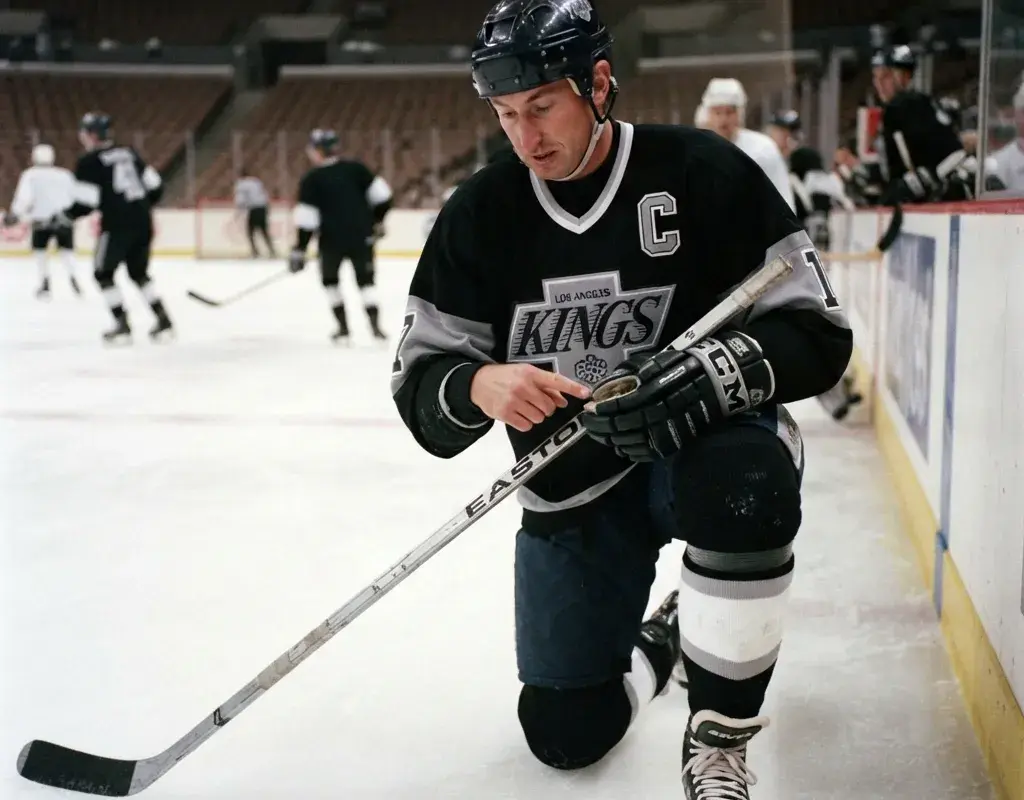
For decades, fans watched Wayne Gretzky treat the hockey puck like a prop in a magic show, executing plays that seemed to defy the laws of physics. While his brilliance was innate, a pivotal shift in his equipment helped redefine the game itself. A new NHL documentary titled The Stick That Changed The Game explores the moment Gretzky abandoned his traditional heavy wooden Titan sticks for a revolutionary two piece aluminum model crafted by Easton Sports. Released on the league’s YouTube channel, the film examines how this partnership between the greatest player in history and a California company known for archery arrows and baseball bats sparked a technological sea change in professional hockey.
The documentary blends technical analysis with nostalgia, bringing together a diverse group of modern superstars and veteran insiders to handle the actual artifact. For some of today’s youngest players, accustomed to ultra lightweight carbon composites, holding Gretzky’s HXP5100 is a shock. At over 600 grams, it feels more like a plank than a precision tool compared to contemporary gear. However, for legends like Sidney Crosby, seeing the stick evokes immediate memories of an era where such technology felt futuristic. Former player Paul Bissonnette recalled receiving a similar model as a child, describing it as the ultimate prize that once made him the happiest kid on earth.
Behind the scenes of this transition was a quest for efficiency without sacrificing power. Gretzky explains in the film that while he prized stiffness for accuracy, he grew tired of the immense weight of wooden sticks. Jim Easton promised he could deliver that same rigidity at a fraction of the weight, leading Gretzky to take a gamble on an unproven material. This decision didn’t just benefit one man; it opened the floodgates for alumni materials in sports equipment and paved the way for the high tech composite sticks used across every rink today. Through archival footage and heartfelt interviews, the film transforms a simple piece of sporting equipment into a symbol of innovation and athletic legacy.