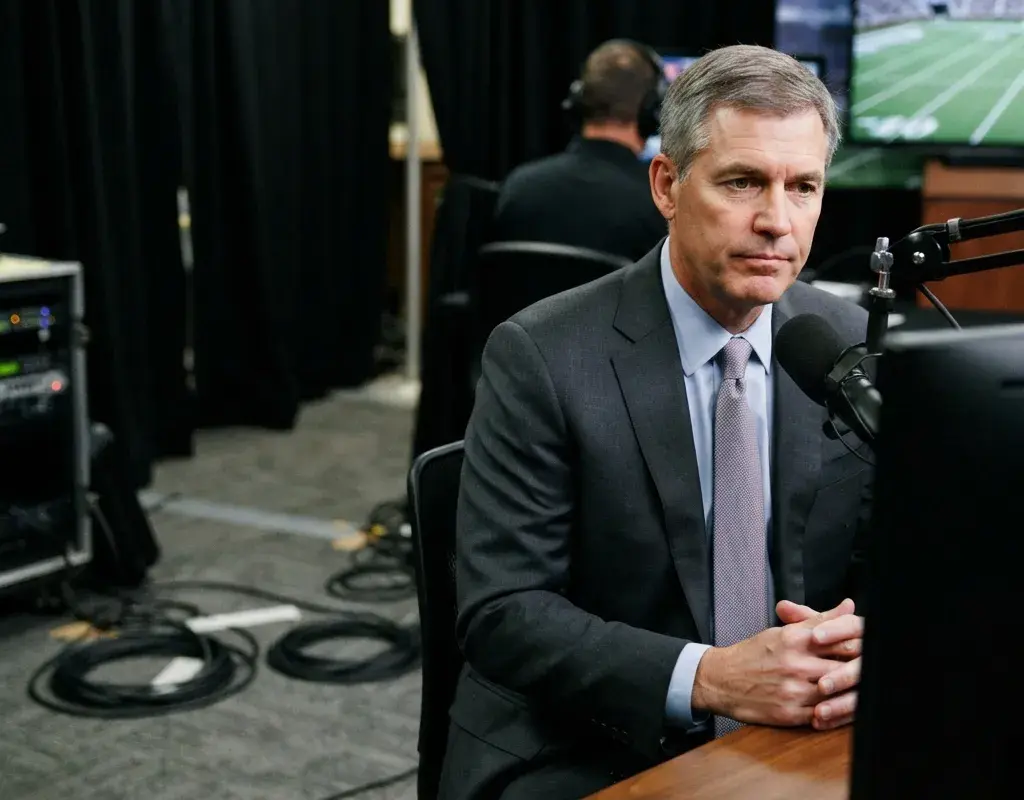
There was a time when Greg Sankey was widely regarded as the most powerful man in college sports, a strategic mastermind capable of seeing around every corner. During the chaos of the pandemic, he served as the steady hand that guided the SEC through uncharted waters, commanding total loyalty from his member institutions. But recent events suggest that the crown has become hollow. A telling sign of this decline appeared during a recent appearance on The Paul Finebaum Show, where instead of projecting leadership, Sankey sounded like a disgruntled neighbor, launching a petty tirade against television announcers for their critiques of officiating.
This disconnect between the commissioner and the current climate is mirroring a deeper erosion of authority within his own house. For years, the SEC operated under a code of silence where grievances were handled behind closed doors, but that facade has crumbled. From LSU openly defying conference rules by rostering a former professional player to Oklahoma athletic director Roger Denny publicly blasting Sankey via social media over scheduling disputes, the internal cohesion that once defined the league is vanishing. These public outbursts signal a shift in dynamics; members are no longer afraid to air their dirty laundry on the front lawn.
While Sankey struggles with insubordination at home, he is also losing the geopolitical war for control over college football. After years of lobbying for federal legislation regarding NIL and transfer portals with little to show for it, Sankey suffered a major blow in the battle over the College Football Playoff expansion. Despite promising his membership a sixteen team model, he was ultimately forced to concede to a twenty four team system championed by Big Ten commissioner Tony Petitti. This transition marks a symbolic passing of the torch from one powerhouse executive to another.
Ultimately, Sankey finds himself caught in a vice between an emboldened rival and an increasingly restless membership. While Tony Petitti has managed to unify the Big Ten and dictate the terms of the sport’s future, Sankey appears bogged down by political distractions and administrative friction. Once viewed as an untouchable architect of modern collegiate athletics, he now risks becoming a cautionary tale about how quickly influence can evaporate when results fail to match rhetoric.